Showing posts with label World War 1. Show all posts

Saturday, 10 April 2021

Lest We Forget

 Past commemorations of ANZAC Day on Bribie

1950 - 1978

--------------------------------------------------------

1950 - ANZAC Day Memorial

ANZAC Day Memorial on Bribie, 1950
source: JJ01_001 Jean Jarmey nee Britnell collection

--------------------------------------------------------

1969 - Laying the Wreath

Bribie Star v7(21) 9 May 1969 p.9

1969 : "The commemoration of the 54th Anniversary of Anzac Day on Bribie Island was a credit to the community. The overcast skies which seemed to lend a solemnity to the occasion did not deter the large crowd that gathered for the service.

Thirty-two veterans of both wars lead the Anzac Day Parade, which commenced at the Bribie State School and marched to the roll of drums of the school band, resplendent in scarlet uniforms. Then followed the Bribie Island Boy Scout Troop with a vanguard of state school children.

Many veterans who did not march stood at attention whilst the Salute was taken by Lt. Commander G.L. Boyd, R.A.N.R. 

President of the Bribie Island Branch of the R.S.L., Mr F. Lacey thanked all present for their attendance of an occasion of significance to returned men and their families.  The First Loyalty Resolution was given by Mr Noel Young and the first address was presented by Father F.C. Ailwood, C. of E. The second resolution was presented by Cheryl Dyer and the third by Sandra Caird.

Wreaths were laid by Caboolture Shire Council, R.S.L. Bribie Island Sub-Branch and Ladies' Auxiliary, Toc H, C.W.A. and by other Island organisations as well as presenting books to the State School Library in honour of Anzac Day.

The Bugler played 'The Last Post', the flag was lowered and many choked with emotion as they remembered loved ones who did not return.

The veterans and friends and official guests retired to the Bribie Island Bowling Club where the combined R.S.L. Ladies Auxiliary, Toc H and the C.W.A. had set out a lavish morning tea. Mr G. Dyer thanked Lt. Comm. Boyd and Father F. Ailwood for their participation in the ceremony. Mr A. Thornely proposed a vote of thanks to "The Ladies", to which President of the Ladies Auxiliary, Mrs D. Watkins responded. Cr Johnson proposed a vote of thanks to the Bribie Island Bowling Club for use of the premises to which Mr A. Loi responded.

Anzac Day celebrations concluded at an open house held in the afternoon at the Bongaree Bowling Club."

Excerpted from: Bribie honours fallen heroes. Bribie Star v7(21) Friday May 9th 1969, page 1.

--------------------------------------------------------

1975 - Anzac Day parade at Bribie Island

Anzac Day parade at Bribie Island in 1975
Photo: Stan Tutt. From MBRC Library collection P1798

--------------------------------------------------------

1978 - Anzac Day parade at Bribie Island

Veterans of the 1914 war at Anzac Parade on Bribie Island in 1978. The ceremony was held at the Anzac memorial, corner of Toorbul Street and First Avenue.
L to R: Eric Watson, Alf Duncanson, Ted Mawhinney, Roy Porter, Harold Braun.
Photo: Sam Hawkins. From MBRC Library collection P1803

--------------------------------------------------------

References:

Bribie honours fallen heroes. Bribie Star v7(21) Friday May 9th 1969, page 1, 9.

Anzac Day plans - Committee formed to organise and conduct the Anzac Day Memorial Service [on Bribie]. Bribie Star v7(19) 11 Apr 1969 p.1

Friday, 26 April 2019

Observation Post block remnants

1980s
Stone the crows?
The following is from an article entitled "Stone the crows?" and 
published in an unknown publication from the 1980s.

Ever wondered just where those stones on Woorim beach just north of the Boyd Street lookout came from?

The foundation blocks from old World War Two
fortifications scattered on Woorim beach.
Photo from the 1980s.

They were, in fact, part of a lookout constructed by the army during World War Two when there was fear of a Japanese invasion.  The lookout was situated up on the sand dunes directly behind where the fallen stones are now [1980s] situated.


Constructed on sturdy wooden trunks the stone shelter was believed to have been built around 1941 and was still standing in 1946 when local resident Margaret Campbell took a photo of a friend of hers sitting in front of the lookout.

As the Observation Post appeared in 1946.
This local lady is pictured in front of the Woorim look-out
which is now [1980s] but a pile of rubble.

Margaret said that she wasn't sure when the lookout fell or exactly what happened to it. She said that it may have just worn with age or the dune gave way with erosion over the years.

But the stones and some pieces of the wooden poles can be clearly seen [in the 1980s] on the beach and depending on the tides at times more are uncovered.

REFERENCE:
Stone the crows? article from the 1980s. Source unknown.
Source: BIHS historical database CC88_037


If you have any information about the above article or photos or if you have a similar photos that you would like to share, our email address is bribiehistoricalsociety@gmail.com

Thursday, 15 November 2018

They Answered the Call

THEY ANSWERED THE CALL

In November 2018 the Bribie Island Historical Society produced a book entitled They Answered the Call.

Click on the name to go to their page from the book They Answered the Call.

FIRST WORLD WAR
M A Bishop 366
W H Bonney 4681
R J Campbell 6477
A T Davis 2792
B Dux 6158
E H Freeman 2987
W Freeman 2809
G L Gollagher 4535
W Gosling 4728
G E Jacques 2188
A Layton 3388
J R Mills 2262
T J Mills 170
W H Mills 944
A W Storr 4891
C A Storr 4892 
H F Storr 653
T M Tripcony 1986


SECOND WORLD WAR
T E Adams Q187167
J M Band
R C Benson QX61294
G H Boothe Q187425
K V Boothe Q267346
W C Costin QX14502
C F Crouch QX27813
M J Darvall QF273914
J A Duke QX9594
W Freeman Q120090
E E I Grant QF268557
D J Heenan 6762
C R Jackson QX52029
W J Lindsay QX13785
A ONeill QX27819
T Shaw QX45157
G H Shields 78860
A Waterfield 76851
G B Wellauer QX30244
R G Wilson Q153131


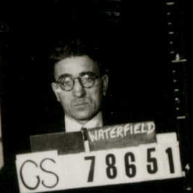
A Waterfield 78651

The following entry is from They Answered The Call.  Click here for the contents page.

Alphonso WATERFIELD

Service number: 78651.  Age: 41 years. Enlisted: 21 Sep 1942.
Occupation: Lighthouse keeper, Bribie Island.  Next of kin: (wife) Mrs Annie Waterfield.
Address on enlistment:  Brisbane.

 1945: Consolidated Catalina aircraft moored at Royal Australian
Air Force (RAAF) Rathmines base.[1]

Photo from Alphonso Waterfield’s
service record.

Service Summary:
31 Aug 1943: Motor boat crew, R.A.A.F. Marine Section Served at Amberley, Sandgate, Maryborough and Rathmines.
26 Nov 1945: Discharged.

Life Summary:
Alphonso Waterfield was born 18 Sep 1901 in London, a son of Alphonso Waterfield and Cecelia Salt.

By 1925 he was lighthouse keeper with the Department of Harbours and Marine, Brisbane and operated the light tower on North Bribie Island from 1929 till he enlisted in 1942. Alphonso Waterfield married Annie Emma Cowell (1909-1980) on 7 Feb 1931 and the couple made their home on North Bribie Island.[2]

Back lead light and Keepers house on
North Bribie Island circa 1930.
[3]

By the early 1940s his wife and young family moved to Brisbane. Alphonso Waterfield died 10 Mar 1976 aged 74 and a memorial plaque at Mt Thompson Memorial Gardens records his service with the R.A.A.F. Marine Section.[4]


[1] Courtesy of the Australian War Memorial P11290-001 https://www.awm.gov.au/collection/C2073273
[2] Bridesmaids in Blue. Daily Standard Sat 28 Feb 1931 p. 4 http://nla.gov.au/nla.news-article180979163
[3] Photo: Bribie Island Historical Society WO9_888056


Friday, 14 September 2018

T M Tripcony 1986

The following entry is from They Answered The Call.  Click here for the contents page.

Thomas Martin TRIPCONY

Service number: 1986.  Age: 25 years.  Enlisted: 22 Nov 1915.
Occupation: Farmer.  Next of kin: (mother) Mrs. Margaret Tripcony.
Address on enlistment:  Cowie Bank, Pumicestone Passage.

Embroidered souvenir postcard from France, showing flags of Italy, USA, UK,
France and Belgium, which was sent from France during Winter 1917 by
Thomas Martin Tripcony
 Junior, to his sister Jean Tripcony.[1]

Service Summary:
1915: 2 reinforcement 49 Infantry Battalion.

1 May 1916: Embarked from Brisbane on HMAT A46 Clan McGillivray.

23 May 1916: Transferred to 41 Battalion.

4 Nov 1916: Proceeded to France.

“The 41st Battalion was raised at Bell's Paddock Camp in Brisbane in February 1916 with recruits from Brisbane, northern Queensland and the northern rivers district of New South Wales. It formed part of the 11th Brigade of the 3rd Australian Division.

After training in Australia and Britain, the 41st Battalion arrived in France on 25 November 1916. It entered the front line for the first time on Christmas Eve and spent the bleak winter of 1916-17 alternating between service in the front line, and training and labouring in the rear areas.

Compared to some AIF battalions, the 41st's experience of the battles in Belgium during 1917 was relatively straightforward. It had a supporting role at Messines on 7 June, captured its objectives at Broodseinde on 4 October with little difficulty, and was spared the carnage of Passchendaele on 12 October. It was some of the battalion's more "routine" tasks that proved its most trying experiences. At the end of June 1917, the 11th Brigade was ordered to establish a new front line west of Warneton, in full view of the Germans. Work carried on night and day under heavy shellfire and the period became known to the battalion as "the 18 days". The start of August found the 41st holding ground captured by two of its sister battalions in a feint attack on 31 July. Enduring continual rain, flooded trenches and heavy shelling many of the battalion's platoons dwindled from 35 men to less than ten.

Belgium remained the focus of the 41st Battalion's activities for the five months after its action in October 1917 as it was rotated between service in the rear areas and the front line. When the German Army launched its last great offensive in March 1918, the battalion was rushed south to France and played a role in blunting the drive towards the vital railway junction of Amiens.

The Allies launched their own offensive on 8 August 1918, and the 41st played an active role both in the initial attack and the long advance that followed throughout August and into September. The 41st participated in its last major action of the war between 29 September and 2 October 1918 as part of the Australian-American operation that breached the formidable defences of the Hindenburg Line along the St Quentin Canal. The battalion was out of the line when the war ended and was disbanded in May 1919.” [2]

4 Oct 1917: Wounded in action – left arm and right ankle.

12 Mar 1918: Returned to Australia from England per Kenilworth Castle; from Durban 28 Apr 1918 per Field Marshall.

26 Jun 1918: Discharged.

Life Summary:
Thomas Martin Tripcony (1889-1975) was the second eldest son of Andrew Buchanan Tripcony (1864-1945) and Margaret Cochrane (1861-1941). Tom was named for his paternal grandfather Thomas Martin Tripcony (1829-1897) who selected 1100 acres at Cowrie Bank, Pumicestone Passage in the early 1870s.

After his military service, Thomas Tripcony took up dairy farming at Cedar Flat, Woodford and married Isabella May Kelly in Sep 1919. By 1936, he was living at Bribie Island though he later moved back to Woodford. Thomas Tripcony, aged 86, died 13 May 1976 at Kilcoy hospital. His service was listed on an Honour Board in Caloundra in 1915.[3]

[1] Courtesy of Sunshine Coast Libraries Image M865991 https://sunshinecoast.spydus.com/cgi-bin/spydus.exe/ENQ/OPAC/BIBENQ?BRN=522036 [per Grace MacBride nee Tripcony]
[2] Australian War Memorial 41st Australian Infantry Battalion https://www.awm.gov.au/collection/U51481
[3] Honour Board Unveiled, Caloundra. The Brisbane Courier Wed 15 Dec 1915, p. 7 http://nla.gov.au/nla.news-article20062483

H F Storr 653


The following entry is from They Answered The Call.  Click here for the contents page.

Harold Francis STORR


Service number: 653.  Age: 21 years.  Enlisted: 11 Nov 1914.
Occupation: Plumber.  Next of kin: (mother) Mrs. E. Storr.
Address on enlistment:  Bribie View.
Military band of the 15 Battalion, 4 Infantry Brigade at Enoggera Camp, 1914.[1]
H.F. Storr, standing, sixth from the right.

Service Summary:
11 Nov 1914: 15 Battalion.

22 Dec 1914: Embarked from Melbourne on HMAT A40 Ceramic for Egypt.

25 Apr 1915: 15 Battalion landed at Gallipoli in the afternoon.

7 May 1915: Wounded in action Gallipoli. GSW right leg.

2 Oct 1915: Returned to Gallipoli which was evacuated in Dec 1915.

1 Jun 1916: 15 Battalion proceeded to France and Western Front.

“The 15th Battalion AIF was raised from late September 1914, six weeks after the outbreak of the First World War. Three-quarters of the battalion were recruited as volunteers from Queensland, and the rest from Tasmania. With the 13th, 14th and 16th Battalions it formed the 4th Brigade, commanded by Colonel John Monash.

The Queensland and Tasmanian recruits were united when the battalion trained together in Victoria. They embarked for overseas just before Christmas. After a brief stop in Albany, Western Australia, the battalion proceeded to Egypt, arriving in early February 1915. Australia already had an AIF division there, the 1st. When the 4th Brigade arrived in Egypt, it became part of the New Zealand and Australian Division. The 4th Brigade landed at ANZAC late in the afternoon of 25 April 1915.

From May to August, the battalion was heavily involved in establishing and defending the front line of the ANZAC beachhead. In August, the 4th Brigade attacked Hill 971. The hill was taken at great cost although Turkish reinforcements forced the Australians to withdraw. At the end of the month, a detachment from A Company reinforced the 14th Battalion's unsuccessful attack on Hill 60. The 15th Battalion served at ANZAC until the evacuation in December.

After the withdrawal from Gallipoli, the battalion returned to Egypt. While there, the AIF was expanded and was reorganised. The 15th Battalion was split and provided experienced soldiers for the 47th Battalion. The 4th Brigade was combined with the 12th and 13th Brigades to form the 4th Australian Division.

In June 1916 they sailed for France and the Western Front. From then until 1918, the battalion took part in bloody trench warfare. Its first major action in France was at Pozieres in August 1916. Along with most of the 4th Brigade, the battalion suffered heavy losses at Bullecourt in April 1917 when the brigade attacked strong German positions without the promised tank support. It spent much of the remainder of 1917 in Belgium, advancing to the Hindenburg Line.

In March and April 1918, the battalion helped stop the German spring offensive. In July 1918, as a result of his valorous actions during the fighting near Hamel, Private Henry Dalziel was awarded the battalion's only Victoria Cross. The battalion participated in the great allied offensive of 1918, fighting near Amiens on 8 August 1918. This advance by British and empire troops was the greatest success in a single day on the Western Front, one that German General Erich Ludendorff described as ‘…the black day of the German Army in this war...’.

The battalion continued operations until late September 1918. At 11 am on 11 November 1918, the guns fell silent. In November 1918, members of the AIF began to return to Australia for demobilisation and discharge.” [2]

8 Oct 1918: Returned to Australia on Taranto.                             

3 Feb 1919: Discharged.

Life Summary:
Harold Francis Storr (1893-1975) was the son of John Storr (1856-1942) and Elizabeth Jones (1857-1948) who resided at Bribie View (also known as Donnybrook) on Pumicestone Passage. After his military service, he returned to Bribie View where he became a grazier. By 1949 the family had relocated to Laidley. Harold Francis Storr, aged 81, died in 1975.

Harold Francis Storr is remembered on a memorial plaque in the Peachester Cemetery, together with his brothers Arthur William Storr and Charles Allan Storr.

[1] Photo and caption: State Library of Queensland image 6163-0001-0001 http://hdl.handle.net/10462/eadarc/5136
[2] Australian War Memorial 15th Australian Infantry Battalion https://www.awm.gov.au/collection/U51455

C A Storr 4892

The following entry is from They Answered The Call.  Click here for the contents page.

Charles Allan STORR

Service number: 4892.  Age: 19 years 3 months.  Enlisted: 16 Sep 1915.
Occupation: Butter maker.  Next of kin: (mother) Mrs E. Storr.
Address on enlistment:  Bribie View.

 2 Aug 1916: Australian soldiers crowd the deck of the troopship Arcadian which is
transporting them from Alexandria to Egypt to Marseilles in France.
[1]

Service Summary:
16 Sep 1915: 15 reinforcement 9 Battalion.

29 Jul 1916: Embarked on Arcadian.

28 Nov 1916: Taken on strength 26 Battalion.

2 Dec 1916: Taken on strength 9 Battalion. (Older brother Arthur was in 9 Battalion).

“In 1917 the battalion moved back to Belgium for the advance to the Hindenburg Line, and in March and April 1918 helped stop the German spring offensive. The battalion participated in the great allied offensive of 1918 and fought near Amiens on 8 August. The advance by British and empire troops was the greatest success in a single day on the Western Front, one that German General Erich Ludendorff described as ‘the black day of the German Army in this war’.

The battalion continued operations until late September 1918. At 11 am on 11 November 1918, the guns fell silent. The November armistice was followed by the peace treaty of Versailles, signed on 28 June 1919.

In November 1918 members of the AIF began to return to Australia for demobilisation and discharge. On 5 February 1919, the 9th and 10th Battalions were amalgamated.”[2]

5 Jul 1919: Returned to Australia on HT Ypiringa.

21 Aug 1919: Discharged.

Life Summary:
Charles Allan Storr (1896-1991) was the son of John Storr (1856-1942) and Elizabeth Jones (1857-1948) who resided at Bribie View.

Charles Storr was working as a butter maker and living in Laidley when he enlisted on 16 Sep 1915, the youngest of three Storr brothers to enlist. His gave his age as 21 years 3 months however he was only 19 years 3 months.

After the First World War, Charles Storr returned to Bribie View where he continued his occupation as dairyman. Many years later he relocated to Laidley. Charles Storr, aged 94, died 26 May 1991.

Charles Allan Storr is remembered on a memorial plaque in the Peachester Cemetery, together with his brothers Arthur William Storr and Francis Harold Storr.

Storr family after First World War.
Charles Allan Storr
 (right back row) and Francis Harold Storr (left back row).[3]


[1] Courtesy of the Australian War Memorial P02321.052 https://www.awm.gov.au/collection/C308871?image=1
[2] Australian War Memorial 9th Australian Infantry Battalion https://www.awm.gov.au/collection/U51449
[3] Photo and caption: State Library of Queensland negative #170251 https://hdl.handle.net/10462/deriv/107070

A W Storr 4891

The following entry is from They Answered The Call.  Click here for the contents page.

Arthur William STORR †

Service number: 4891.  Age: 27 years 9 months.  Enlisted: 14 Sep 1915.
Occupation: Surveyor’s assistant.  Next of kin: (father) Mr John Storr.
Address on enlistment:  Bribie View.

 Troops on board HMAT A73 Commonwealth prior to departure. 
An officer and sentries stand along the edge of the wharf. [1]

Service Summary:

14 Sep 1915: 15 reinforcement 9 Battalion.

28 Mar 1916: Embarked at Brisbane on HMAT A73 Commonwealth.

2 Dec 1916: Taken on strength 9 Battalion in France.

26 Mar 1917: Killed in action at Lagincourt.

“After the withdrawal from Gallipoli, the battalion returned to Egypt. It was split to help form the 49th Battalion and bought up to strength with reinforcements. In March 1916 the battalion sailed for France and the Western Front. From then until 1918 the battalion took part in operations against the German Army. The battalion's first major action in France was at Pozieres in the Somme valley. The 9th Battalion attacked on the extreme right of the line and it was during this action that Private John Leak won, with the bayonet, the battalion's only Victoria Cross. Later the battalion fought at Ypres, in Flanders, before returning to the Somme for winter.” [2] (Continues with Charles Allan Storr).


Roll of Honour: Arthur William Storr's name is located at panel 109 in the Commemorative Area at the Australian War Memorial in Canberra.[3]


Life Summary:
Arthur William Storr (1887-1917) was the son of John Storr (1856-1942) and Elizabeth Jones (1857-1948) who resided at Bribie View. He was working as a surveyor’s assistant and enlisted from Bribie[4] on 14 Sep 1915. Both he and his brother, Charles Allan Storr [4892], embarked with 15 reinforcement 9 Battalion from Brisbane in Mar 1916. A third brother, Francis Harold Storr [653] also enlisted.

Arthur William Storr was killed in action in battle in France on 26 Mar 1917 and is remembered on the Villers-Bretonneux Memorial, Picardie, France. He is also remembered on a memorial plaque in the Peachester Cemetery, together with his brothers Francis Harold Storr and Charles Allen Storr.

Memorial in the Peachester Cemetery[5]


[1] Courtesy of the Australian War Memorial PB0366 https://www.awm.gov.au/collection/PB0366/?image=1
[2] Australian War Memorial 9th Australian Infantry Battalion https://www.awm.gov.au/collection/U51449
[4] Laidley Notes. Military News. Word was received that Pte Arthur Storr had been killed in action in France on 26 Mar. Pte A. Storr was one of three brothers at the front. He enlisted from Bribie in Oct, 1915. Queensland Times, 5 Jun 1917.